The 2027 Ford Bronco Mini Offroad Concept brings a fresh interpretation to one of America’s most recognizable adventure SUVs. Instead of following the dimensions of a conventional full-size off-road vehicle, this design explores a shorter, wider, and more muscular four-door Bronco with a distinctive compact silhouette.
Finished in sage olive green metallic with a contrasting black roof, the concept combines classic Bronco-inspired styling with modern protective bodywork. Oversized all-terrain tires, exceptionally thick fender flares, a substantial front bumper, and expedition-style roof cargo equipment give the small SUV a commanding appearance.
This independently created AI-assisted automotive design is not an official Ford production model. The following 13 images explore the exterior proportions, front grille, hood details, roof accessories, side profile, rear styling, and contemporary interior of this imaginative Bronco Mini Offroad concept.
2027 Ford Bronco Mini Offroad Exterior Design Overview

The opening front three-quarter image introduces the concept’s distinctive proportions. Its sage olive green metallic body combines a short four-door cabin with an exceptionally wide stance. Round modern headlights, a prominent BRONCO grille, thick black fender flares, and oversized off-road tires establish a rugged appearance. A roof rack carrying black and yellow cargo equipment completes the adventure-inspired design.
The most striking feature is the relationship between the compact body and its unusually substantial exterior components. The vehicle appears considerably shorter than a conventional four-door Bronco, yet its broad shoulders and large tires give it a powerful visual presence.
The olive-green finish provides a sophisticated alternative to brighter off-road colors. Combined with black protective surfaces, it creates a restrained appearance that complements the vehicle’s muscular proportions.
Rather than relying on excessive decorative details, the concept emphasizes recognizable shapes: a broad front end, upright windshield, squared cabin, and strong wheel arches.
These elements help preserve the familiar Bronco character while exploring a more compact design direction.
Front Grille, Round Headlights and Rugged Bumper
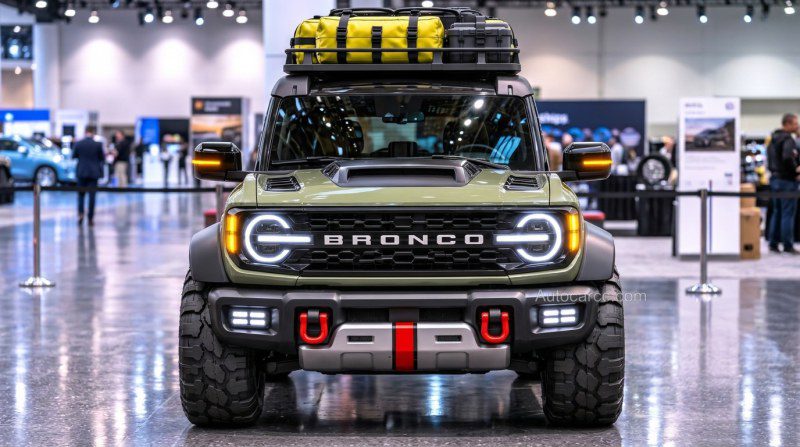
The straight front view emphasizes the concept’s broad stance and symmetrical styling. A black grille with prominent BRONCO lettering sits between modern round headlights. Below, a substantial protective bumper incorporates contrasting red recovery-style hooks. Thick black fender extensions frame the front corners, giving the compact SUV a strong, planted appearance.
The front fascia plays an essential role in preserving the Bronco identity. Round headlights and bold grille lettering are familiar visual themes, and their combination works particularly well with the concept’s upright body.
Although the vehicle is compact, the wide grille and substantial bumper make its front end appear unusually imposing.
The red hooks introduce small contrasting details against the otherwise restrained olive-green and black color palette. Their illustrated appearance suggests recovery equipment, although no actual load ratings or functionality have been established.
The overall arrangement emphasizes visual strength without abandoning the recognizable character of a traditional Bronco.
Front-End Proportions and Expedition Roof Equipment

This wider front perspective reveals the complete relationship between the vehicle’s aggressive front end and its expedition-inspired roof system. The broad bumper, round headlights, and oversized tires create a muscular foundation, while the black roof rack carries contrasting cargo equipment above the compact cabin.
Roof accessories add visual height to the vehicle and reinforce its outdoor-oriented character. They also create an interesting contrast with the short overall body length.
The concept maintains a balanced appearance by repeating dark materials throughout the exterior. Black fenders, roof equipment, bumper components, and wheel surfaces help connect the different areas of the design.
The resulting silhouette feels substantial despite the compact proportions.
Hood Scoop, Ventilation Details and Windshield Design

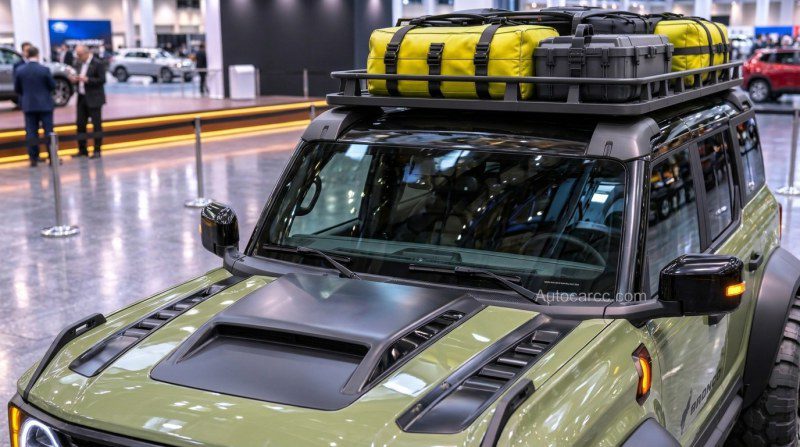
The upper front close-up highlights the sculpted hood, central scoop-style detail, and additional ventilation-inspired surfaces. Behind the hood, the upright windshield maintains the recognizable boxy character of the Bronco. The roof rack and expedition cargo remain visible above the cabin, reinforcing the design’s emphasis on adventure styling.
The hood is an important part of the concept’s visual identity. Its sculpted surfaces introduce additional depth without substantially changing the vehicle’s familiar front-end proportions.
Ventilation-inspired details also create a more technical appearance. However, their presence in a design rendering does not confirm functional airflow, engine cooling, or any specific powertrain configuration.
The relatively upright windshield complements the short cabin and helps maintain the vehicle’s compact, squared silhouette.
Roof Rack, Hard Cargo Case and Adventure Accessories
The roof close-up focuses on the concept’s expedition equipment. A substantial black roof rack carries a dark hard cargo case and contrasting yellow bags. These accessories add a recognizable overlanding character to the compact SUV while maintaining the same rugged visual language established by the bumpers, fenders, and wheels.
Roof-mounted storage equipment is commonly associated with outdoor travel because it can provide additional space for camping and adventure gear when properly engineered.
On this concept, the accessories also serve an important styling purpose. The dark rack structure complements the black roof, while the yellow cargo elements introduce a small amount of contrast.
The arrangement creates an expedition-inspired appearance without requiring major changes to the body silhouette.
Because this is a design study, the illustrated roof rack’s mounting system, load capacity, and compatibility with real-world driving conditions have not been verified.
Muscular Side Body, Four Doors and Protective Side Steps
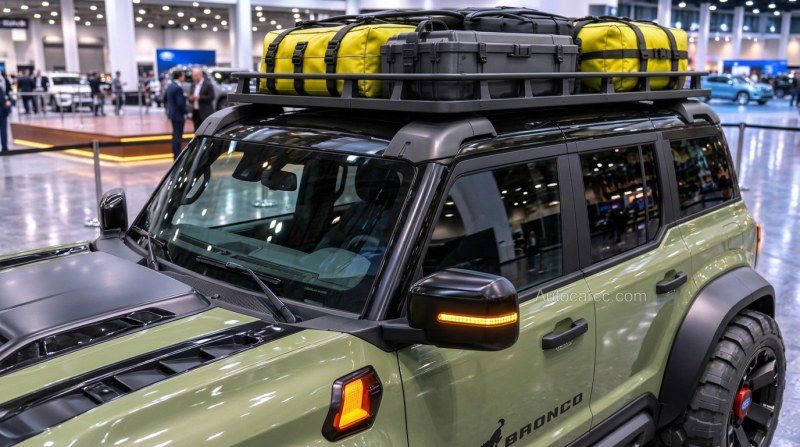
The front-side perspective reveals how the concept combines four doors with an unusually short and muscular body. Thick black fender flares surround the oversized tires, while substantial side steps visually connect the front and rear wheel areas. The olive-green doors and black roof create a restrained, modern appearance.
Four-door proportions are especially challenging when the overall vehicle length is deliberately reduced. The cabin must maintain a believable relationship between the front doors, rear doors, and surrounding body panels.
In this interpretation, the relatively short body and pronounced wheel arches create an unusually compact silhouette.
The substantial side steps reinforce the rugged styling while providing a strong horizontal element beneath the doors.
The contrast between smooth painted surfaces and darker protective components helps prevent the design from appearing overly complicated.
Compact Four-Door Side Profile and Wide Off-Road Stance
The complete side profile provides the clearest view of the vehicle’s compact four-door proportions. Its short wheelbase, upright cabin, black roof, and large off-road tires create a distinctive silhouette. Thick fender extensions emphasize the wide stance, while the dark side steps and lower-body components reinforce the muscular design.
From this angle, the relationship between the wheels and cabin becomes particularly noticeable. The oversized tires occupy a substantial portion of the vehicle’s overall height.
The relatively short body makes the concept appear more compact than a conventional four-door off-road SUV, although no exact dimensions have been established.
The four-door layout remains an important part of the design. It preserves the appearance of additional passenger access while exploring a shorter exterior package.
The overall silhouette suggests a miniature adventure vehicle rather than a traditional urban crossover.
Rear Three-Quarter Exterior Design
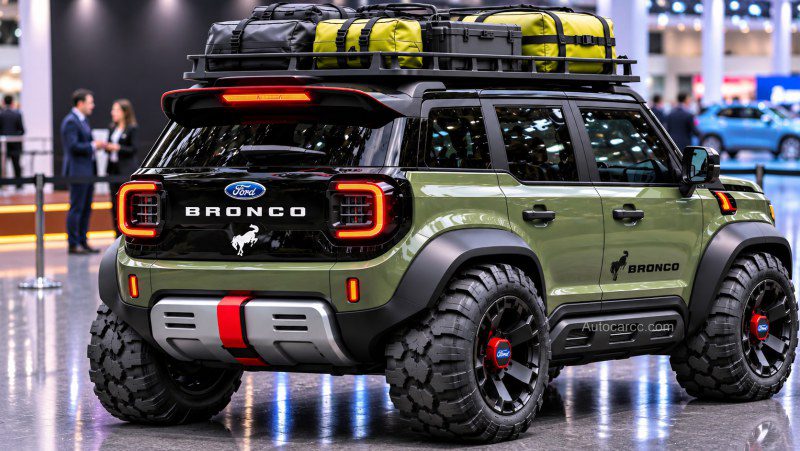
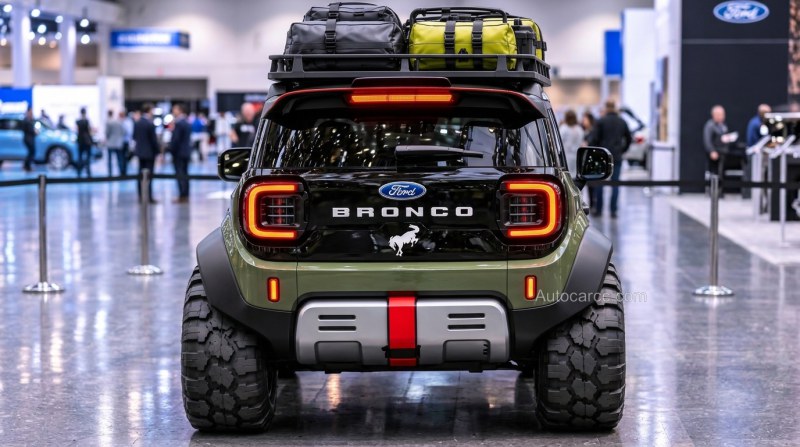
The rear three-quarter view introduces a different interpretation of Bronco styling. Instead of an externally mounted spare tire, the concept features a clean rear section with a glossy black panel, Ford branding, BRONCO lettering, and squared rear lighting elements. A substantial lower bumper with contrasting metallic and red details completes the design.
The absence of a rear-mounted spare tire is one of the most distinctive differences between this concept and the familiar full-size Bronco silhouette.
Without a large spare wheel covering the tailgate, the rear design appears cleaner and more contemporary.
The dark rear panel creates a strong contrast against the olive-green bodywork, while the squared lighting elements complement the vehicle’s upright proportions.
The broad bumper maintains the rugged character established at the front, helping the exterior feel consistent from multiple viewing angles.
Rear Bodywork, Tailgate and Modern Lighting Design

This rear perspective highlights the relationship between the olive-green body panels and the glossy black tailgate section. Squared taillights frame the rear design, while Ford branding and BRONCO lettering provide recognizable identity elements. The thick rear bumper and surrounding protective components continue the vehicle’s muscular exterior styling.
The rear panel gives the concept a more modern appearance than a conventional exposed spare-tire arrangement.
Its dark finish also complements the black roof and substantial fender extensions, creating a consistent material treatment across the vehicle.
The squared lighting elements reinforce the upright shape of the rear body.
Although the design appears rugged, its exact lighting technology, structural construction, and production feasibility remain unspecified.
Low-Angle Rear Bumper and Oversized Off-Road Tires
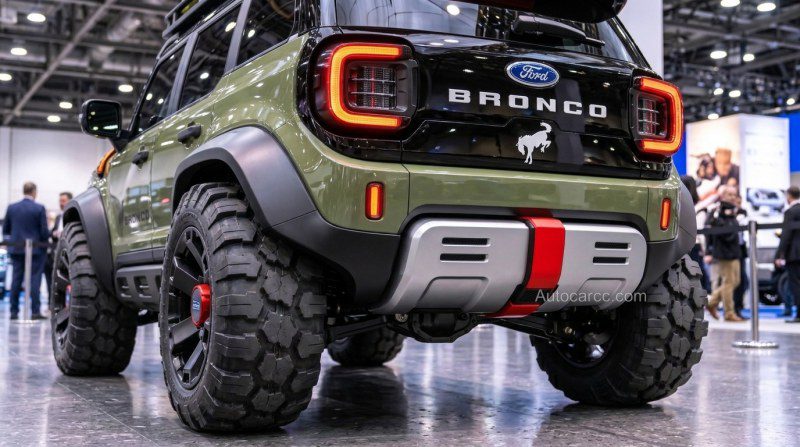
The low-angle rear image emphasizes the concept’s substantial lower-body components. Large off-road tires, thick black fenders, and a metallic-finish rear bumper dominate the composition. Red accent details introduce contrast beneath the dark rear section, while the compact body appears unusually broad and muscular from this viewpoint.
Camera perspective can dramatically influence the perceived size of a vehicle. A lower viewpoint makes the wheels and protective components appear more prominent.
In this design, the effect is particularly noticeable because the tires are unusually large relative to the compact body.
The metallic bumper finish provides contrast against the darker fender extensions and rear panel.
These elements create an impression of off-road strength, although the images do not establish actual suspension travel, approach or departure angles, or verified recovery capability.
Upper Rear Design, Roof Cargo and Cabin Proportions
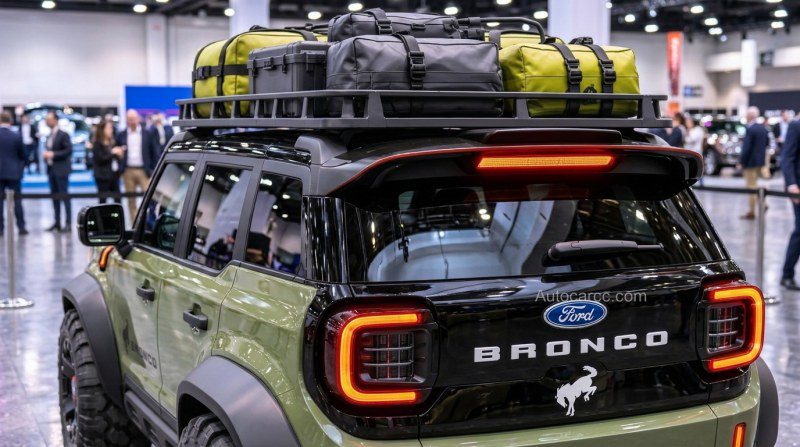
The upper rear perspective focuses on the relationship between the roof cargo system, rear window, and squared body design. Black expedition equipment sits above the compact cabin, while the rear lighting and contrasting dark panel maintain the concept’s modern appearance. The olive-green bodywork provides a consistent connection between the upper and lower sections.
From this angle, the compact proportions become especially noticeable. The short cabin and roof-mounted accessories create an unusual combination of small vehicle dimensions and substantial adventure equipment.
The roof rack also introduces a visual connection between the front and rear exterior views.
Its dark finish matches the roof and other protective components, helping the overall design remain cohesive.
Modern Interior Dashboard, Steering Wheel and Digital Displays
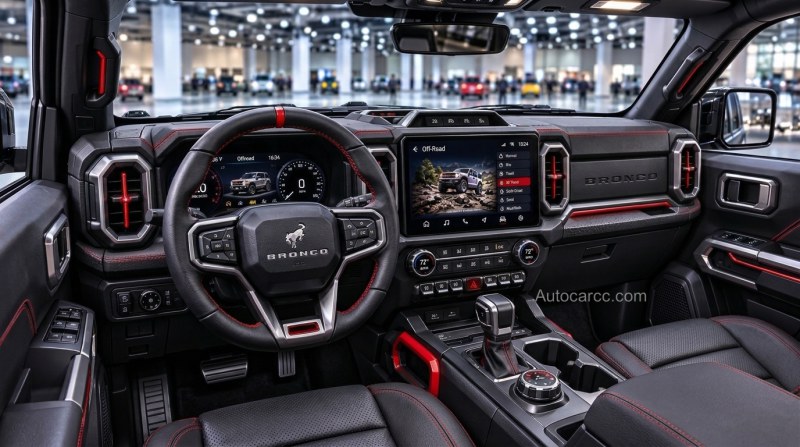
The interior introduces a modern cockpit dominated by dark surfaces and substantial dashboard components. A BRONCO-branded steering wheel sits ahead of the digital instrument cluster, while a large central touchscreen occupies a prominent position. Vertical air vents, red accents, and a thick center console reinforce the cabin’s contemporary yet rugged character.
The dark interior provides a strong contrast with the olive-green exterior. Its substantial dashboard design also reflects the muscular proportions of the bodywork.
The central display introduces a technology-oriented appearance, while the steering wheel and instrument cluster establish a clear driver-focused arrangement.
Red accents add small areas of contrast without overwhelming the predominantly black cabin.
The result is an interior that feels more substantial than the compact exterior dimensions might initially suggest.
As an independent concept, the illustrated dashboard and electronic features are not confirmed Ford production equipment.
Center Console, Gear Selector and Interior Controls

The final image examines the center console and surrounding dashboard controls. A prominent gear selector sits within a substantial dark console, while nearby control surfaces continue the interior’s modern design language. The arrangement complements the thick dashboard, large display, and contrasting red details visible in the wider cockpit image.
The center console plays an important role in establishing the cabin’s overall character. Its size, shape, and relationship with the dashboard influence how organized and substantial the driving environment appears.
In a compact SUV, careful interior packaging would be essential to maintain comfortable passenger space.
The illustrated console explores a premium, rugged appearance, but its precise dimensions and functions have not been established.
Is the 2027 Ford Bronco Mini Offroad a Real Production Model?
The Ford Bronco is an established production SUV with a long history in the American automotive market. Its recognizable design features include an upright body, round headlight styling, prominent grille lettering, and an emphasis on outdoor capability.
Ford also offers the Bronco Sport as a separate, smaller SUV within the broader Bronco family.
However, the 2027 Ford Bronco Mini Offroad shown in this gallery is an independent design concept. It is not an officially announced production vehicle or a confirmed new Ford model.
The concept explores a more exaggerated combination of compact proportions and muscular exterior styling than a conventional small SUV.
Its short four-door body, oversized tires, substantial fender flares, and expedition equipment are creative design choices rather than verified factory specifications.
No official engine options, drivetrain configuration, dimensions, pricing, or release date have been established for this illustrated vehicle.
How Does This Concept Compare With the Ford Bronco and Bronco Sport?
The full-size Ford Bronco is designed around traditional off-road SUV priorities, including rugged styling and available four-wheel-drive capability. Its proportions reflect the requirements of a production vehicle intended for a broad range of driving conditions.
The Ford Bronco Sport takes a different approach, offering a smaller SUV package with a more everyday-oriented design.
This independent Bronco Mini concept explores a third visual direction: a particularly short four-door body combined with oversized off-road styling elements.
Compared with the larger Bronco, the concept appears more compact and exaggerated in its proportions. Its large tires and thick fenders occupy a greater percentage of the overall body.
Compared with the Bronco Sport, the concept emphasizes a more aggressive appearance, with substantial bumper protection, a wider visual stance, and more prominent expedition accessories.
These are design comparisons rather than technical performance comparisons. The concept has no verified production engineering or specifications.
Why a Compact Four-Door Bronco Is an Interesting Design Idea
A compact four-door off-road SUV presents an interesting challenge because it must balance passenger access, exterior proportions, and rugged styling within a relatively short body.
The traditional Bronco design language provides a strong foundation for this kind of exploration. Its upright cabin, recognizable front grille, and squared exterior surfaces translate naturally into a smaller format.
However, shortening the body while retaining four doors changes the visual relationship between the cabin and wheels.
This concept addresses that challenge by emphasizing width. Thick fender flares and oversized tires make the vehicle appear substantial even though the cabin is relatively short.
The sage olive green metallic finish also contributes to its appeal. It provides a refined appearance that works well with the black roof, protective components, and expedition cargo equipment.
Inside, the dark dashboard, digital displays, and substantial center console create a modern environment that complements the rugged exterior.
The result is a distinctive interpretation of how a smaller Bronco-inspired SUV could look.
Off-Road Styling Versus Real-World Capability
The concept’s exterior includes many recognizable off-road design features: oversized tires, wide fenders, protective bumpers, recovery-style hooks, side steps, and roof-mounted cargo equipment.
These elements create a strong visual impression, but appearance alone cannot establish actual off-road performance.
A production vehicle would require appropriate suspension geometry, steering clearance, drivetrain engineering, structural validation, cooling systems, and safety testing.
Large tires would also need sufficient clearance throughout suspension movement and steering operation.
Likewise, roof-mounted equipment would require properly engineered mounting points and verified load limits.
Because this project is a visual design study, its illustrated components should be understood as styling ideas rather than confirmed functional equipment.
The concept is most useful as an exploration of proportions, materials, and recognizable Bronco design themes.
Final Thoughts on the 2027 Ford Bronco Mini Offroad Concept
The 2027 Ford Bronco Mini Offroad Concept presents an unusual combination of compact dimensions and muscular SUV styling. Its short four-door body, sage olive green metallic finish, black roof, oversized tires, thick fender flares, and expedition accessories create a distinctive interpretation of the familiar Bronco identity.
The modern front grille and round headlights preserve recognizable design themes, while the clean rear panel without an externally mounted spare tire introduces a different approach to the back-end styling.
Inside, the substantial dashboard, digital displays, and dark center console complement the rugged exterior.
Across 13 detailed images, the gallery explores how a miniature four-door Bronco could combine recognizable heritage styling with contemporary design elements.
Although this is not an official Ford production model, it offers an interesting visual interpretation of a smaller, wider, and more muscular adventure SUV.
Would you prefer a compact four-door Bronco with this aggressive design, or the more traditional proportions of the full-size Bronco? Share your favorite feature in the comments.
Disclaimer: The 2027 Ford Bronco Mini Offroad featured in this article is an independently created AI-assisted automotive design concept. It is not an official Ford product, production prototype, or confirmed future vehicle. All illustrated features and components are conceptual. Ford, Bronco, and related trademarks belong to Ford Motor Company and their respective owners. This project is not affiliated with or endorsed by Ford Motor Company.