The 2027 Hummer H2 Offroad Concept brings the unmistakable character of the legendary Hummer SUV into a bold new design interpretation. With its massive body, muscular proportions, heavy-duty exterior components, and commanding road presence, this concept explores how the iconic H2 could look with a more modern and aggressive off-road identity.
Finished in a deep olive-green color with contrasting black accessories, the vehicle combines classic Hummer styling with contemporary details. Its wide stance, oversized all-terrain tires, armored bumpers, and expedition-inspired equipment create an imposing appearance.
This independently created automotive concept is not an official General Motors production model. The following six images explore its exterior design, front fascia, side profile, rear styling, modern interior, and conceptual engine compartment.
2027 Hummer H2 Offroad Concept Exterior Design Overview
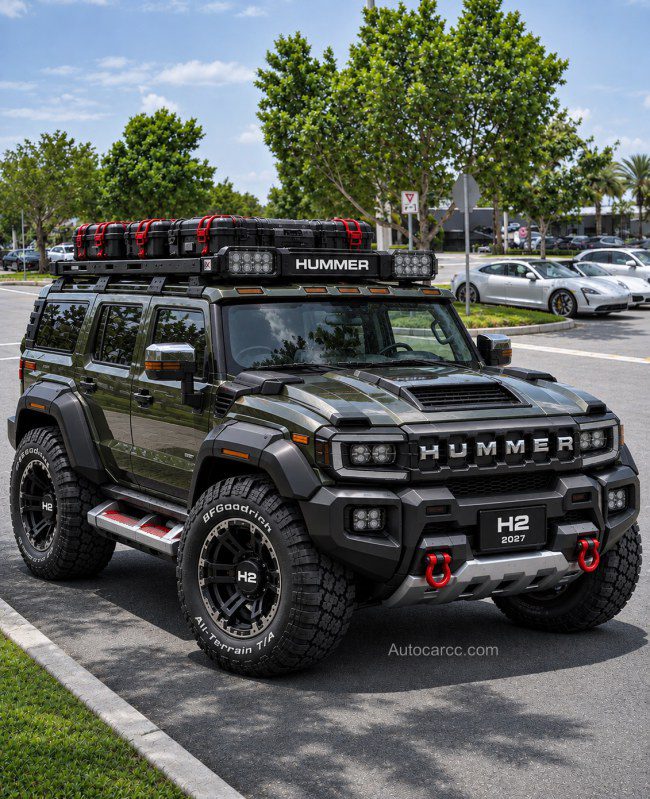
The first image presents the Hummer H2 concept from a front three-quarter perspective, emphasizing its massive body and aggressive off-road proportions. The olive-green exterior contrasts with thick black fender flares, oversized all-terrain tires, and a reinforced front bumper. A roof-mounted cargo system adds an expedition-ready appearance, while the recognizable HUMMER lettering establishes the vehicle’s identity.
One of the most striking characteristics of this design is its substantial body structure. The concept maintains the upright silhouette associated with the original Hummer H2 while introducing a more muscular appearance. Its broad front section, pronounced wheel arches, and heavy-duty accessories reinforce the impression of a vehicle designed to dominate difficult terrain.
The glossy olive-green finish provides a distinctive balance between ruggedness and premium styling. Rather than relying on bright colors or excessive decoration, the body uses a relatively restrained color palette that allows its proportions and mechanical details to attract attention.
Black exterior components play an important supporting role. The fender extensions visually widen the vehicle, while the bumper and lower body protection create a stronger separation between the painted body and the off-road equipment.
The result is an imposing SUV design that preserves the recognizable Hummer character while exploring a more contemporary approach to extreme off-road styling.
Front Grille, LED Lighting and Armored Bumper
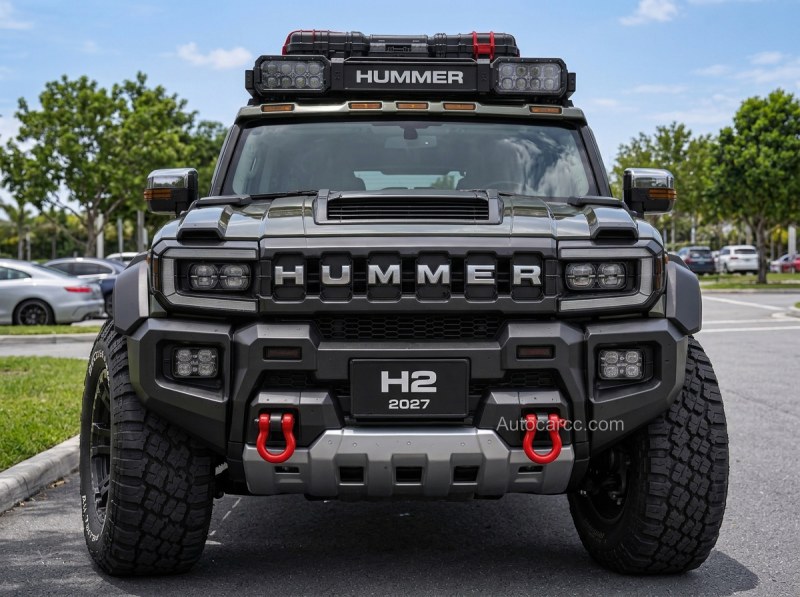
The direct front view highlights the vehicle’s exceptionally wide stance and substantial front-end construction. A prominent grille with HUMMER lettering dominates the central section, accompanied by squared lighting elements and a sculpted hood. Below, a thick armored bumper incorporates contrasting red recovery hooks and heavy-duty protective surfaces.
The front fascia is designed to communicate strength. Its upright arrangement follows the traditional Hummer philosophy, where broad horizontal surfaces and recognizable geometric shapes create a powerful visual identity.
Compared with a conventional family SUV, this concept places greater emphasis on the apparent durability of its exterior components. The bumper extends across the lower front section, creating a solid visual foundation beneath the grille and headlights.
The red recovery hooks introduce small but noticeable color accents. Their placement also reinforces the off-road theme, suggesting equipment associated with vehicle recovery during demanding driving conditions. As this is a concept rendering, the hooks’ actual load ratings and functionality have not been established.
The hood design adds another layer of visual depth. Its sculpted surfaces complement the grille and help the front body appear substantial without losing the original Hummer’s recognizable boxy character.
Overall, the front design emphasizes width, structural presence, and a clear connection to the Hummer nameplate’s rugged heritage.
Side Profile, Widebody Fenders and Off-Road Wheels
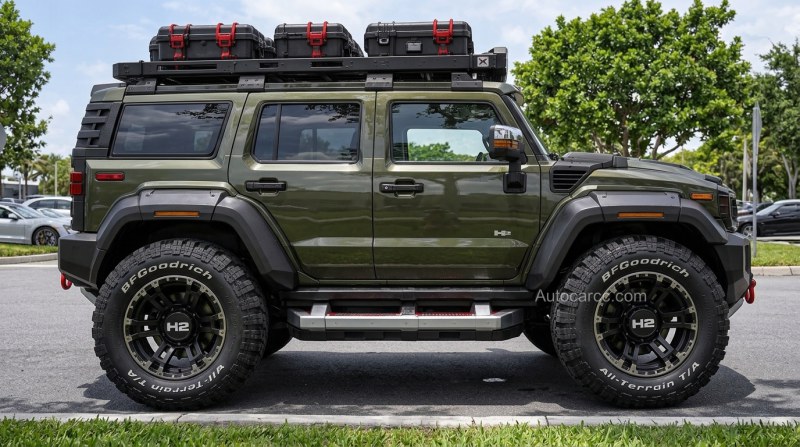
The side profile reveals the full proportions of the Hummer H2 concept. Its four-door body maintains a long, upright passenger cabin, while oversized black wheels, thick fender flares, and substantial side steps reinforce the vehicle’s muscular appearance. The roof rack carries multiple storage boxes, adding a practical expedition-inspired element to the exterior design.
From this perspective, the relationship between the cabin and lower body becomes especially clear. The tall passenger compartment provides the familiar box-shaped Hummer silhouette, while the wide wheel arches create a strong visual connection to the oversized tires.
The black wheels complement the olive-green paint and dark exterior trim. Their substantial appearance contributes to the vehicle’s wide stance, while the all-terrain tire styling supports the overall off-road theme.
Thick fender flares are among the most important features of this design. They extend the visual width of the body and create a more aggressive transition between the wheel openings and the surrounding panels.
The side steps provide another prominent detail. Positioned beneath the doors, they visually connect the front and rear wheel areas while suggesting easier access to the elevated cabin.
Above the passenger compartment, the roof rack and cargo boxes introduce an expedition-oriented character. These accessories suggest additional storage capacity for outdoor equipment, although the rendering does not establish their actual dimensions or carrying capacity.
Despite the substantial accessories, the concept retains a cohesive appearance through its consistent use of olive-green bodywork and black exterior components.
Rear Exterior Design, Spare Tire and Heavy-Duty Bumper

The rear three-quarter view continues the rugged design established at the front. A large externally mounted spare tire occupies a prominent position on the rear door, accompanied by vertical taillights, a reinforced lower bumper, and additional expedition equipment. The olive-green bodywork and contrasting black components remain consistent with the rest of the vehicle.
The rear-mounted spare tire is one of the strongest visual references to traditional off-road vehicles. Beyond its practical association with remote travel, it adds considerable depth to the rear design and emphasizes the concept’s adventure-oriented character.
Vertical taillight elements help preserve the upright appearance of the body. Their placement complements the tall rear section and provides a recognizable visual structure around the tailgate.
The lower bumper continues the armored styling seen at the front. Its thick construction contributes to the impression of durability, while the recovery-inspired details reinforce the vehicle’s intended off-road identity.
The rear perspective also reveals the relationship between the roof-mounted equipment and the overall body proportions. Cargo boxes positioned above the cabin add visual height and suggest the type of storage arrangement often associated with expedition vehicles.
Together, the spare tire, rear lighting, bumper, and roof equipment create a cohesive rear design that feels connected to the aggressive front and side styling.
Modern Interior Dashboard and Driver Cockpit
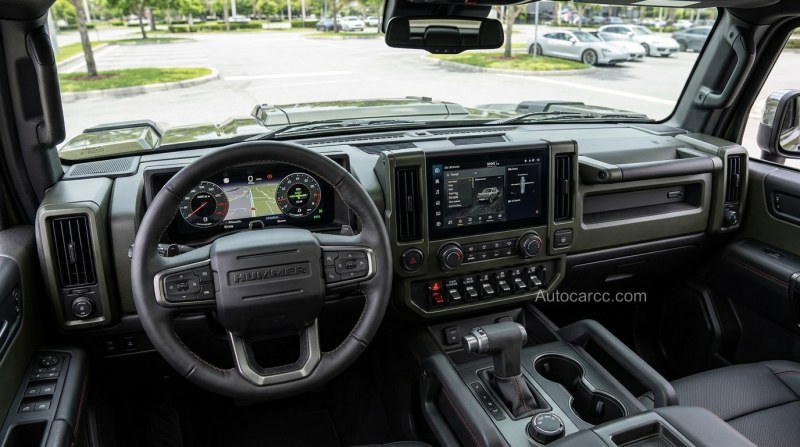
Inside the cabin, the concept introduces a modern dashboard with a dark interior theme, digital instrumentation, a central infotainment display, and substantial physical controls. The steering wheel features HUMMER branding, while the center console incorporates a prominent gear selector, storage areas, and cup holders. The overall layout combines contemporary technology with a rugged design character.
The interior follows a different approach from the exterior without abandoning the vehicle’s identity. While the body emphasizes armor-inspired styling and oversized proportions, the cabin focuses on the driving environment and the arrangement of controls.
Digital displays introduce a modern element to the dashboard. Their placement suggests an emphasis on presenting driving information and infotainment functions within the driver’s field of view.
Physical buttons remain an important part of the visual design. In a rugged SUV, clearly separated controls can contribute to a more purposeful appearance, particularly when combined with a substantial center console.
The large gear selector reinforces the mechanical character of the cabin. Its prominent placement provides a visual connection between the dashboard and the central driving controls.
Dark surfaces and structured dashboard sections create a restrained interior atmosphere. Rather than introducing numerous contrasting colors, the concept uses a consistent visual theme that complements the black exterior accessories.
The rendering presents an interior design direction, not a verified production cabin. Display functions, control features, materials, and equipment availability remain conceptual.
Engine Bay and Performance-Inspired Mechanical Design

The engine compartment image introduces a performance-inspired mechanical layout beneath the open hood. Large intake-related components, dark engine covers, contrasting red details, and structural elements create a visually complex presentation. The arrangement suggests a powerful combustion-engine theme, although the rendering does not provide enough evidence to confirm a specific engine configuration or performance output.
The original Hummer H2 was known for its large-displacement gasoline V8 engines. That historical association makes a V8-inspired mechanical presentation a natural direction for an independent H2 concept.
However, the illustrated engine compartment should not be confused with an official powertrain announcement. The image does not establish engine displacement, horsepower, torque, transmission compatibility, or production feasibility.
Performance-oriented intake components contribute to the mechanical appearance of the compartment. Their shapes and arrangement emphasize the concept’s focus on power and substantial engineering.
Contrasting colors help separate individual mechanical areas visually, while structural elements reinforce the impression of a reinforced engine compartment.
For an SUV of this apparent size and weight, any real production powertrain would require careful consideration of cooling, drivetrain strength, emissions compliance, fuel consumption, and vehicle durability.
This rendering is therefore best understood as a mechanical design study that complements the exterior and interior images rather than a specification sheet for a future Hummer vehicle.
Is the 2027 Hummer H2 an Official Production Vehicle?
No official production return of the Hummer H2 for the 2027 model year has been announced by General Motors. The vehicle featured in this gallery is an independent concept that imagines a modern interpretation of the historic Hummer SUV.
The original Hummer H2 was produced during the 2000s and became recognizable for its large dimensions, upright body, distinctive front grille, and rugged styling. It occupied a unique position in the SUV market, combining civilian road use with a visual identity strongly influenced by military-inspired vehicle design.
The Hummer name has since returned through the GMC Hummer EV lineup, which represents a different approach to the brand’s traditional image. Modern Hummer EV vehicles use electric propulsion rather than the large gasoline engines associated with the original H2.
This distinction is important when evaluating the 2027 Hummer H2 concept. The images do not represent an officially confirmed successor, nor do they establish that General Motors intends to revive the H2 nameplate.
Instead, the project explores how the familiar H2 design language could be adapted to contemporary automotive styling preferences.
What Makes This Hummer H2 Design Different?
The concept emphasizes a combination of traditional Hummer proportions and more exaggerated off-road styling. Several elements contribute to its distinctive appearance, including the widebody treatment, oversized tires, reinforced bumpers, expedition accessories, and updated cabin presentation.
The exterior retains the original Hummer’s strong geometric identity. Its upright cabin and broad body surfaces create an immediate visual connection to the historic H2, while the thick fender flares and substantial wheels make the concept appear more aggressive.
The olive-green and black color combination also plays an important role. Olive green reinforces the outdoor-oriented character, while black wheels, trim, and protective components create a consistent contrast across the vehicle.
The roof-mounted storage equipment adds another dimension to the design. It suggests a vehicle intended for extended travel and outdoor activities, complementing the heavy-duty bumper and spare tire arrangement.
Inside, the dashboard introduces a more contemporary interpretation of the Hummer cabin. Digital instruments and a central display provide a modern visual foundation, while substantial controls preserve the rugged character.
The result is a concept that draws from the original H2’s recognizable identity while exploring a more muscular and technology-oriented appearance.
Final Thoughts on the 2027 Hummer H2 Offroad Concept
The 2027 Hummer H2 Offroad Concept presents a bold interpretation of one of the most recognizable American SUVs of the 2000s. Its massive proportions, olive-green exterior, thick armored bumpers, oversized all-terrain tires, and expedition equipment create a distinctive visual identity.
The six-image gallery covers the vehicle from multiple perspectives, beginning with the front three-quarter exterior and continuing through the grille, side profile, rear design, cockpit, and engine compartment.
Although the concept is not an official General Motors product, it demonstrates how the classic Hummer H2 design language can be reimagined with modern styling and contemporary interior features.
Would you prefer a future Hummer H2 with a traditional V8 engine, a hybrid powertrain, or a fully electric drivetrain? Share your favorite design detail and your preferred direction for a modern Hummer SUV.
Disclaimer: The 2027 Hummer H2 Offroad Concept featured in this article is an independently created AI-assisted automotive design project. It is not an official General Motors or GMC product, production prototype, or confirmed future vehicle. All illustrated specifications, components, and mechanical details are conceptual. Hummer and related trademarks belong to their respective owners. This project is not affiliated with or endorsed by General Motors.